The 'Real Me' Is Just a Better-Lit Me: On the Myth of the Authentic Alt Account
Photo: RamdasIndia, CC0, via Wikimedia Commons
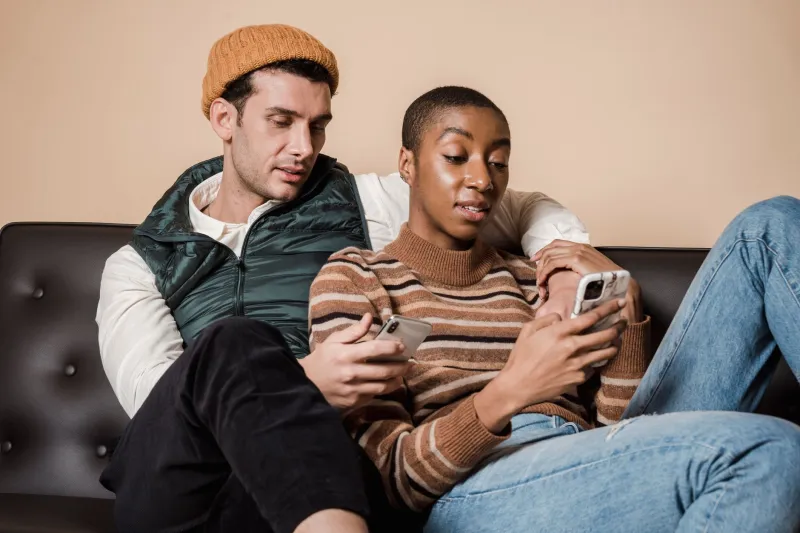
There's a moment of quiet theater that happens every time someone updates their Close Friends list. A name gets added. A name gets quietly removed. Somewhere, a person notices they can no longer see someone's stories and says nothing, because saying something would reveal that they were checking.
We've been sold a compelling story: the main feed is the performance, and the private stuff is the truth. The finsta. The alt. The close friends story. The 'burner' that everyone somehow knows about. Each one is marketed — implicitly or explicitly — as the real you.
We'd like to file a formal objection.
Backstage Is Still a Stage
Sociologist Erving Goffman had this figured out decades before smartphones: we all perform 'front stage' behavior for strangers and 'backstage' behavior for our inner circle. What the app era did was build a backstage with an audience counter on it.
And that's the problem. The moment a 'real you' space has an audience — even an audience of twelve — it develops a style. You know your close friends list. You know what they find funny. You know what gets replies. So the rawest, most 'authentic' content you post is still being shaped, consciously or not, by the people watching.
Performing authenticity is still performance. It's just performance with a smaller, more forgiving crowd.
The Authenticity Arms Race
Here's the irony nobody wants to sit with: as the main feed got more polished, the private spaces got their own aesthetic. The blurry, unflattering, 'haha I'm such a mess' close friends story is a genre now. It has conventions. It has expectations. There's a way the 'unfiltered' version of you is supposed to look, and if your raw content doesn't land right, you delete it and try again.
We've all done the delete-and-repost on a story that was supposed to be casual. That's not a character flaw — that's what happens any time humans know they're being observed. The observation is the whole game.
So Is Curation a Trap, or Just a Fact?
Honest answer: it's a fact. You cannot not curate. The choice isn't between filtered and unfiltered — it's between knowing your filters and pretending you don't have any. The person who says 'this is just my alt, I don't think about it' is thinking about it. The person whose close friends story is 'totally unedited' has chosen which 40 seconds of their day to show you.
And honestly? That's fine. The lie isn't having a curated self. The lie is calling it something it isn't.
What Would a Platform Have to Do Differently
This is the question we sit with at Just Sayin'. Can you build a space for unfiltered expression without the unfiltered expression instantly developing its own costume? We think the honest version looks less like 'here's a private room for your real self' and more like removing the reasons people dress anything up in the first place:
- No audience metrics on the raw stuff. The second you can count who saw it, you start performing for the count.
- No permanence as punishment. A lot of curation is self-protection against a screenshot living forever. Expression gets braver when it's allowed to be temporary.
- Norms, not just features. An app can't legislate honesty. But it can make it normal to say the plain thing instead of the aesthetic hint.
The 'real you' isn't hiding in a close friends story. It's wherever you say something you actually mean, to people who actually know you, without checking how it landed.
Everything else — main feed, alt, burner, whatever — is just you, on a stage, choosing your lighting. Nothing wrong with that. Just don't call it the unfiltered version. Just sayin'.