Keeping It Real Is Getting People Fired: The Hidden Cost of Honesty Online
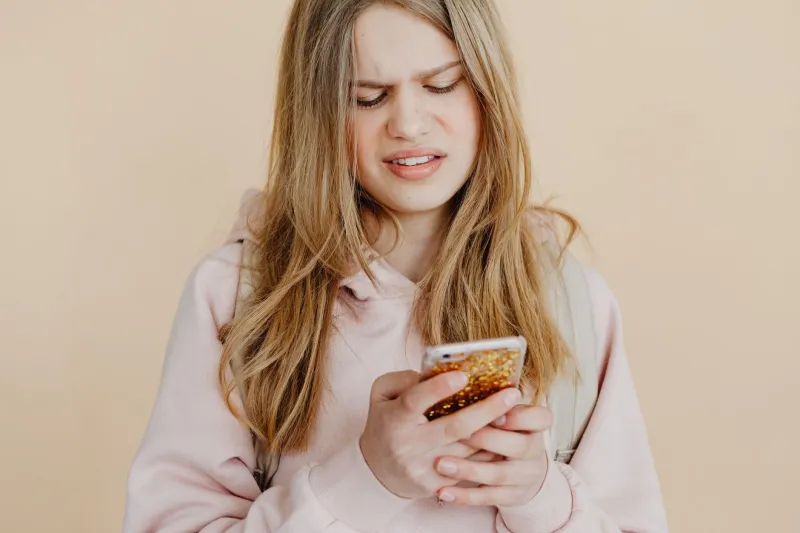
There's this thing that happens online that nobody really has a name for yet. You say something — casually, off the cuff, the kind of thing you'd say to a friend over drinks — and then you wake up the next morning to find it screenshotted, quote-tweeted, and sitting in front of an audience of forty thousand strangers who are all extremely unhappy with you.
You weren't trying to make a statement. You were just talking.
Welcome to the authenticity tax. It's the price you pay for being real in a world that's built to weaponize realness.
The Promise That Came With a Fine Print
The whole pitch of social media — and yeah, platforms like Just Sayin' are built on this too — is that you can show up as yourself. No PR team, no press release, no carefully workshopped talking points. Just you, your thoughts, and a post button.
For a while, that felt genuinely revolutionary. The internet was supposed to democratize voice. Regular people could speak plainly and be heard. Authenticity was the currency. Relatability was the brand.
But somewhere along the way, the infrastructure changed around the content. Screenshots became permanent records. Quote-tweets became public court proceedings. Algorithms learned that outrage travels faster than nuance, so they started prioritizing exactly that. And suddenly, the same unfiltered honesty that made someone likable in a comment section became a liability in a job interview — or a termination meeting.
When a Casual Take Becomes a Career Event
The cases aren't hard to find. In 2021, a food blogger in Atlanta posted a frustrated, half-joking comment about tipping culture that got screenshotted and circulated wildly out of context. She lost two brand partnerships within a week. The post itself — which she'd written in about thirty seconds and almost immediately forgot — lived on in Google search results for her name for over a year.
In 2022, a high school teacher in Ohio made an offhand comment in a local Facebook group about a parenting trend she found exhausting. Parents in her district found it. Her school received complaints. She kept her job, barely, but spent the better part of a semester under informal review.
These aren't celebrity stories. These are regular people who said regular things and got an extraordinarily disproportionate response. And the common thread isn't that they said anything particularly outrageous. It's that their words got lifted out of context, amplified to an audience they never intended, and judged by a standard they had no idea applied to them.
The Screenshot Economy
Here's what makes this different from anything that came before it: the permanence and portability of the record.
A screenshot is the most democratic and most dangerous tool on the internet simultaneously. It requires zero technical skill. It preserves tone-deaf phrasing perfectly while stripping away every shred of context. And it travels at the speed of a share button.
People who study online behavior call this "context collapse" — the phenomenon where content created for a specific audience ends up in front of a completely different one, with completely different norms, expectations, and zero shared history with the person who made it.
You post something for your 200 followers. Someone screenshots it. It lands in front of 200,000 people who don't know you, don't follow you, and have no reason to extend you any charitable interpretation. That's context collapse in action. And it happens dozens of times a day to people who never see it coming.
Going Stealth: The People Who Just Disappeared
Talk to people who've been publicly ratio'd — who've had a post go sideways and spent a week watching the notifications pile up like a slow-motion disaster — and a lot of them say the same thing: they went quiet after.
Not just quieter. Quiet. Some deleted their accounts entirely. Some kept their profiles but stopped posting anything personal. Some went private and started treating their social presence like a professional portfolio — carefully curated, aggressively neutral, essentially empty of anything real.
One user we spoke to, a 29-year-old marketing coordinator from Chicago who asked to stay anonymous, described it bluntly: "I used to post my actual opinions. Now I post memes and food pictures. It's boring, but it's safe. I'm not willing to risk my job over a tweet anymore."
That's the authenticity tax paid in full. And the cost isn't just personal — it's cultural. When the people most likely to say something real and interesting decide the risk isn't worth it, what's left is a feed full of carefully managed non-statements and strategic vagueness.
Can You Actually Be Real Online Anymore?
This is the question that doesn't have a clean answer. And anyone who tells you it does is either very lucky or not paying attention.
The honest answer is: it depends on your exposure. If you have a small, trusted network and you're not in a profession where your employer monitors your digital footprint, you have more room to move. If you're public-facing, in education, healthcare, law, or any job where reputation is infrastructure, the margin for casual honesty has gotten very, very thin.
That's not cynicism. That's just the current landscape.
What you can do is be intentional about where you're real and with whom. Not every platform is the same. Not every audience carries the same risk. The unfiltered comment that lands perfectly in a close-knit group chat might read very differently plastered across a public thread.
Just Sayin': Realness Shouldn't Require a Lawyer
The whole point of saying something is that it lands somewhere. That it means something to someone. That there's a human being on the other end of it who hears you and gets it.
The authenticity tax is the thing that's quietly making that harder. Not impossible — but harder. And the people paying the highest price are usually the ones who were just trying to be honest, not strategic. Not performative. Just real.
That's worth being frustrated about. Because a world where genuine expression requires calculating your professional risk first isn't a world that's figured out free speech — it's just one that's gotten better at making people self-censor before anyone else has to do it for them.
Say what you mean. Know your room. And maybe think twice before you hit post on that spicy take at 11pm on a Tuesday. Not because your opinion doesn't matter — but because the internet is a terrible place to have it misunderstood.