Receipts Never Expire: The Hidden Price of Saying Something That Actually Matters
You post something real. Something honest. Maybe it's an opinion that felt urgent in the moment, or a joke that landed perfectly with your audience, or just a raw, unfiltered thought you decided to let out instead of swallowing. And for a while, it's fine. Great, even.
Then six months later, someone finds it. Crops out the context. Adds a caption. And suddenly that real, honest thing you said is being used as evidence of something you don't even recognize.
This is the world we live in now. And it's quietly changing what people are willing to say — or whether they're willing to say anything at all.
The Screenshot Is the Most Powerful Weapon Nobody Gave You Permission to Use
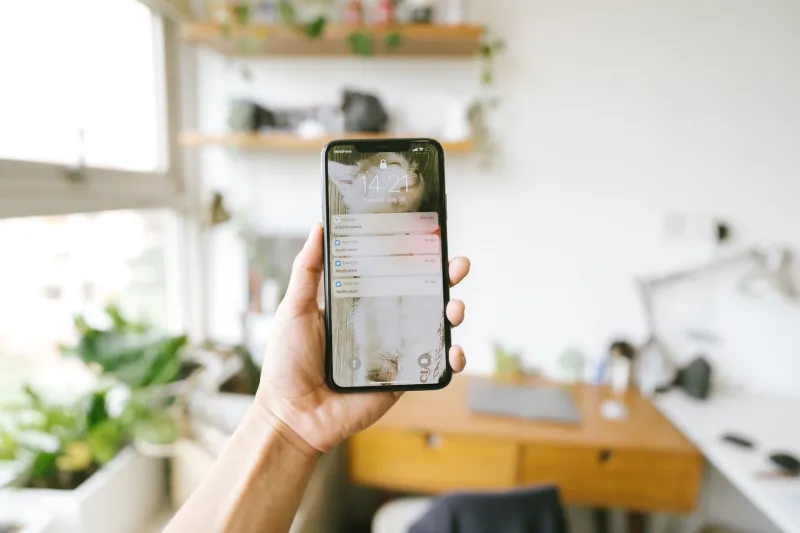
There's something almost absurdly simple about the screenshot as a technology. It's literally just a picture of your screen. No hacking required, no special access, no technical skill. Anyone can do it in under a second, and what they capture is permanent in a way that the original post often isn't.
You can delete a tweet. You can edit a caption. You can take down a story. But you cannot un-screenshot something. Once someone has it, it exists outside your control entirely — on their phone, in their DMs, in a group chat you'll never see, ready to be surfaced whenever it becomes useful.
That asymmetry is the core of the problem. You post with context: the mood you were in, the conversation you were responding to, the specific moment in time that made the thing you said make sense. The screenshot strips all of that away and delivers just the words, frozen and decontextualized, to an audience that has no obligation to care about what you actually meant.
The Self-Censorship Loop Nobody Talks About
Here's what that dynamic does to people over time: it teaches them to pre-censor. Not in a conscious, deliberate way — more like a reflex that develops after you've seen enough people get torched by old posts. You start running a mental screenshot simulation before you post anything meaningful. How would this look, cropped? What's the worst-case caption someone could put on this?
If that simulation produces an uncomfortable answer, a lot of people just... don't post it. They swallow the thought. They go with something safer, more generic, more plausibly deniable. And the thing that made them interesting online — the real, specific, unfiltered version of who they are — quietly disappears.
"I used to post whatever I was thinking," says Janelle, a 31-year-old teacher in Columbus, Ohio. "Now I read everything back to myself and try to imagine how it would look if someone wanted to make me look bad. Which is a horrible way to think, but I've seen what happens when you don't."
This is the self-censorship loop: the fear of decontextualization creates caution, caution creates blandness, and blandness creates a version of you online that doesn't really exist. You're performing a safer, blander character to protect the real one from getting screenshot-tortured.
Context Isn't Just Lost — It's Weaponized
What makes screenshot culture genuinely different from older forms of "receipts" is the sophistication with which context gets stripped and repurposed. It's not just that context gets lost accidentally — it gets removed intentionally, because a decontextualized post is more useful as a weapon than an accurate one.
Crop out the part where you were joking. Remove the thread that explains why you said what you said. Cut the timestamp that shows you were responding to something specific. What's left is a clean, portable piece of content that can be dropped into any conversation and read as evidence of whatever the person sharing it wants it to mean.
This happens across every kind of social space — friend groups, professional networks, online communities, public Twitter beef. The mechanics are the same whether it's a celebrity getting canceled or two coworkers with a grudge. The screenshot becomes a document, and documents carry authority that spoken words don't.
"Someone screenshotted a DM I sent to a friend — a private DM — and shared it without any of the context of the conversation we were having," says Derek, a 27-year-old in Chicago. "Out of context it looked terrible. In context it was a dumb joke between two people who know each other well. But nobody cared about the context. The screenshot was already everywhere."
The Authenticity Trap
Here's the brutal irony at the center of all this: the platforms built around authentic expression are the exact places where authenticity has become most dangerous.
The whole pitch of casual social apps — the whole reason people show up — is the promise of a space where you can be real. Unfiltered. Just sayin' what you actually think. But the screenshot makes that promise a trap. The more real you are, the more material you're generating for someone to use against you later. The more you actually say what you mean, the more receipts exist.
So people adapt. They learn to be authentic-adjacent — performing the vibe of realness without the actual risk of it. They say things that feel honest but are carefully structured to be defensible. They share opinions that are real but not too real. They exist online in a permanent half-crouch, ready to duck.
And the platforms reward this, by the way. The carefully calibrated take gets engagement. The genuinely raw post gets screenshots.
Is There a Way Out?
Some people have responded to screenshot culture by going fully private — locking accounts, moving to encrypted messaging, keeping anything real off public platforms entirely. Others have gone the opposite direction: radical transparency, posting everything, operating on the theory that if there's nothing to hide, screenshots lose their power.
Neither approach is really a solution. The private route trades expression for safety, which defeats the point of being online in the first place. The radical transparency route works until it doesn't — until the one post that seemed fine actually wasn't, and the receipts surface at the worst possible moment.
What's actually needed is a cultural shift in how we treat screenshots: a norm that says decontextualized content is bad-faith content, that sharing someone's words without their surrounding context is a form of dishonesty, not accountability. That norm exists in theory. In practice, it loses every time there's a good enough reason to share the screenshot anyway.
Until that changes, the tax on saying something real online keeps going up. And a lot of people are quietly deciding it's not worth paying.